



Sequencing Equipment Deliveries During an Operating Theatre Fit-Out

Posted by efanho
from the Agriculture category at
30 Oct 2026 09:52:14 am.
Share this page: 


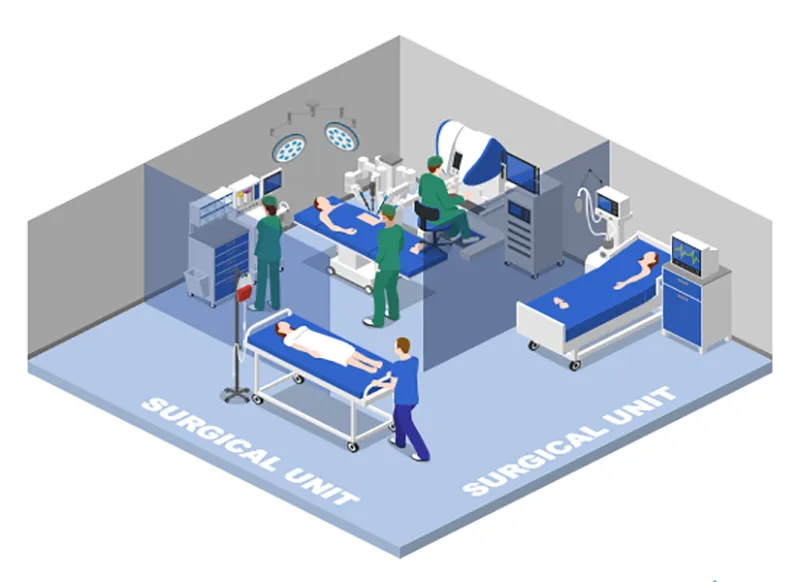
An operating-theatre renovation or new-build involves many categories of equipment that cannot all arrive on the same day without creating congestion, storage problems, and sequencing conflicts. Fixed items such as operating tables, ceiling-mounted surgical lights, and pendant systems must be installed before mobile and portable devices can be positioned. Training materials and final documentation arrive still later. Without an explicit delivery sequence, the site becomes cluttered, protective packaging is damaged, and installation teams lose time moving equipment that arrived too early. A clear sequencing plan, agreed by all parties and linked to contractual responsibilities, prevents these difficulties.
This article describes a practical method for establishing and managing that sequence. It focuses on organisational dependencies and storage logistics; it does not prescribe specific models, room layouts, or clinical acceptance criteria.
Why sequencing matters more than many project teams expectOperating-theatre projects combine construction, fixed-equipment installation, and the later arrival of mobile devices. Construction teams need clear floors and access routes. Fixed-equipment installers need completed structural work and accurate positioning references. Mobile-equipment suppliers need a clean, secure holding area and a defined window when the theatre is ready to receive their devices. When these windows overlap or are left undefined, the typical results are double-handling, damaged packaging, incomplete deliveries that are only noticed weeks later, and disputes about who was responsible for protection and storage.
Mapping the high-level dependency chainA workable high-level sequence for a single theatre (or a small suite) usually contains five stages:
- Civil and structural works complete
Floors, walls, ceilings, and fixed building services (power, medical gases, ventilation, data) are finished and accepted. Temporary protection is still in place, but the space is ready for precision installation work. - Fixed equipment installation
Operating-table bases, surgical lights, ceiling pendants, integrated audiovisual systems, and any built-in storage or writing surfaces are installed, aligned, and tested for basic function. These items require accurate positioning, structural fixing, and often coordination with ceiling voids or floor ducts. - Mobile and semi-fixed equipment delivery
Anaesthesia machines, patient monitors, electrosurgical units, suction systems, patient-warming devices, and similar items are delivered to a designated clean holding area. They remain in protective packaging until the fixed works are complete and the theatre is ready for final positioning. - Accessories, consumables, and small devices
Probes, cables, disposable circuits, instrument sets, and small free-standing devices arrive closer to the training and commissioning phase. Delivering them too early increases the risk of loss or damage; delivering them too late delays training. - Documentation and training package
Final user manuals, configuration records, acceptance checklists, and scheduled training sessions occur after the majority of equipment is in place and powered. Training is most effective when staff can work with the actual devices they will use.
| 2 | Fixed (lights, pendants, tables) | Installed in theatre | Installation contractor | Dust protection until handover |
| 3 | Mobile major devices | Clean holding room adjacent to suite | Hospital or nominated logistics contractor | Temperature and humidity limits if specified by manufacturer |
| 4 | Accessories and small devices | Locked cabinet inside holding room | Same as above | Keep in original packaging until training |
| 5 | Documentation | Project document controller | Project team | Version control essential |
The table is reviewed at every site meeting. Any proposed change of storage location is treated as a formal change that requires acknowledgement by the affected parties.
Assigning contractual responsibility for each delivery windowAmbiguity about who is responsible for off-loading, checking, and protecting a delivery is a frequent source of claims. The sequencing plan therefore records, for each milestone:
- The contractual party responsible for arranging transport and off-loading
- The named individual on site who will receive and check the delivery against the packing list
- The time window during which the delivery is expected
- The consequences if the delivery arrives outside that window (storage charges, refusal rights, etc.)
Managing multi-theatre or phased projectsWhen several theatres are being fitted out in sequence, the same logic is applied to each theatre, but the overall programme must also manage the movement of shared resources (installation teams, holding-room space, training staff). A simple overlay chart that shows the five stages for each theatre side by side reveals clashes early. Holding-room capacity is often the binding constraint; once it is full, further deliveries must be held at the supplier’s premises or at an off-site warehouse until space becomes available.
Handling early or late deliveriesEven the best plan encounters early or late arrivals. The sequencing rules should state in advance what happens in each case. Early deliveries are normally refused or accepted only into a designated overflow area at the supplier’s risk. Late deliveries trigger an immediate review of the downstream stages (installation, training, clinical opening) so that the impact is understood and mitigated. The key discipline is that no delivery is accepted into the main holding area unless the preceding stage has been formally completed.
Linking the sequence to equipment familiesDifferent equipment families naturally belong to different stages. Ceiling-mounted lights and pendants belong to stage 2; anaesthesia machines and monitors belong to stage 3; most accessories belong to stage 4. YSENMED's operating theatre equipment overview is a starting point for identifying equipment groups that may require different delivery and installation milestones. Once the groups are listed, each can be assigned to the appropriate stage and the corresponding storage and responsibility rules applied.
Documenting the sequence so it survives staff changesProjects often outlast individual team members. The sequencing plan, the logistics table, and the responsibility assignments are therefore kept as controlled documents in the project file. Any revision is version-numbered and circulated to all parties. At the final handover the completed sequence, together with records of any deviations and their resolution, forms part of the project close-out documentation.
Indicators that the sequencing process is workingSimple measures tell a project manager whether sequencing discipline is being maintained:
- Percentage of deliveries that arrived inside their agreed window
- Number of items that had to be double-handled because they arrived too early
- Number of accessories reported missing at the start of training
- Number of disputes about storage or protection responsibility
Closing remarksSequencing equipment deliveries during an operating-theatre fit-out is primarily an organisational task. It does not require complex software; it requires clear stages, explicit storage rules, named responsibilities, and the discipline to refuse deliveries that arrive outside their window. When these elements are present, the site remains manageable, installation teams can work efficiently, and the clinical department receives equipment that is complete, undamaged, and accompanied by the correct documentation. The method described here is straightforward; its value lies in consistent application from the first delivery to the final training session.
https://www.ysenmed.com/pages/operating-theatre-solution
0 Comments