



Commercial Vehicle Gear Manufacturing Across Different Gear Positions
Posted by hsgearworks
from the Fashion/Accessories category at
27 Oct 2026 02:59:25 am.
Share this page: 


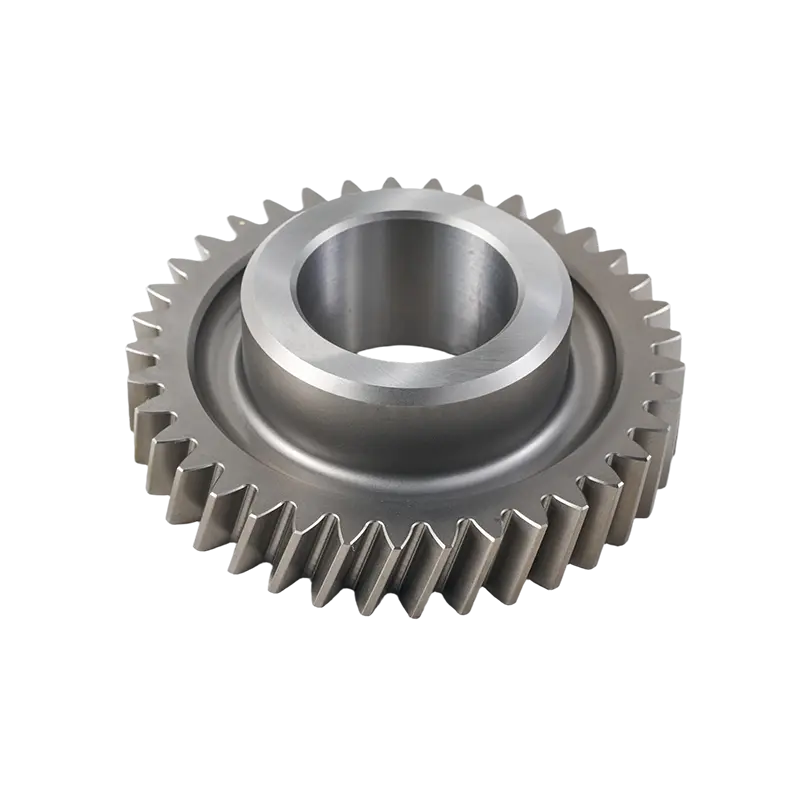
Low-speed gears in a heavy vehicle transmission must withstand substantial torque when the truck starts under load or climbs a gradient. Under these conditions, tooth-root bending stress becomes an important design consideration. Tooth dimensions, root geometry, material strength, and the toughness of the gear core all contribute to resistance against fatigue and sudden load changes. A suitable design must provide enough strength without creating unnecessary size or weight.
Higher-speed gears often accumulate many hours of operation during highway driving. Although the torque conditions may differ from those of lower gears, repeated contact between tooth surfaces can gradually cause fatigue damage. Surface hardness, tooth-flank finish, lubrication, and alignment influence the development of pitting and other wear patterns. Accurate tooth geometry also helps maintain consistent meshing and can reduce unwanted vibration and transmission noise.
Reverse gears have a different operating pattern. They may engage less frequently than forward gears, but engagement conditions can introduce sudden loads, particularly when shifting practices or drivetrain movement create additional stress. Tooth profiles, entry chamfers, and the design of the engagement mechanism can affect how smoothly the components mesh. The actual requirements depend on the gearbox configuration and the intended operating conditions.
Countershaft gears present another consideration because their rotation and loading depend on the transmission layout. Some components remain in motion during much of the vehicle's operating time, even when the selected gear changes. Shaft alignment, bearing support, runout, and tooth accuracy therefore influence how loads are distributed across the gear teeth. A small alignment error can create uneven contact and accelerate wear over extended operation.
Auxiliary drive components also require attention. Transfer-case gears distribute power within the drivetrain, while power take-off (PTO) gears drive equipment such as hydraulic pumps and other work attachments. Their load patterns may include repeated starts, variable torque, and periods of sustained operation. Specifications suitable for a road transmission gear may not automatically suit a PTO component working under a different duty cycle.
For this reason, Commercial Vehicle Gear Manufacturing should begin with the function and loading conditions of each part. Forging, machining, heat treatment, and final inspection must be selected according to the required geometry and mechanical properties. Case hardening may provide wear resistance while retaining core toughness, but the treatment parameters need to match the material and component design.
When evaluating Commercial Vehicle Gear Manufacturing, engineers should consider the complete operating profile rather than applying one hardness value or accuracy grade to every gear. Matching each component's design and manufacturing process to its position helps support consistent meshing, fatigue resistance, and dependable gearbox operation throughout the vehicle's working life.
Tags: Commercial Vehicle Gear Manufacturing, Truck Transmission Gears, Gear Heat Treatment, Countershaft Gears, Power Take-Off Gears
0 Comments