



Top 10 Questions to Ask Before Purchasing a Hot Stamping Foil Slitting Machine

Posted by daisylmn
from the Business category at
17 Sep 2026 02:11:51 am.
Share this page: 


However, the market offers a wide range of machines with varying capabilities and price points. To help you avoid costly mistakes and select equipment that delivers long-term value, we have compiled the top 10 questions you should ask every potential supplier before making a purchase decision.
1. What is the Actual Dynamic Slitting Accuracy Under Production Speed?
Many suppliers quote impressive precision figures, but you need to distinguish between static accuracy and dynamic accuracy under full operating speed. For high-end packaging applications such as tobacco, luxury goods, and premium labels, tolerances as tight as ±0.1mm may be required.
What to ask: "Can you demonstrate the cutting accuracy at maximum production speed using our specific foil material?" Request a live test run with your own material samples. Observe the edge quality and dimensional consistency across a continuous run of at least one hour, not just during the initial startup phase. A machine that performs well on ideal materials may struggle with the specific coatings and substrates you use daily.
2. Which Tension Control System is Employed, and Does It Include Taper Tension?
Hot stamping foil is an ultra-thin multilayer composite, typically only 12–25μm thick, consisting of a PET base film, release layer, color layer, aluminum coating, and adhesive layer. This structure makes the foil extremely sensitive to tension fluctuations. Excessive tension causes stretching and breakage; insufficient tension leads to wrinkles and misalignment.
What to ask: "Is the tension control system fully closed-loop, and does it include taper tension functionality?" Look for a system that provides independent segmented control for unwinding, slitting, and rewinding zones, with tension fluctuation maintained within ±3% of the set value. Taper tension is essential because as the rewinding diameter increases, tension must decrease according to a preset curve to prevent the outer layers from compressing and deforming the inner layers.
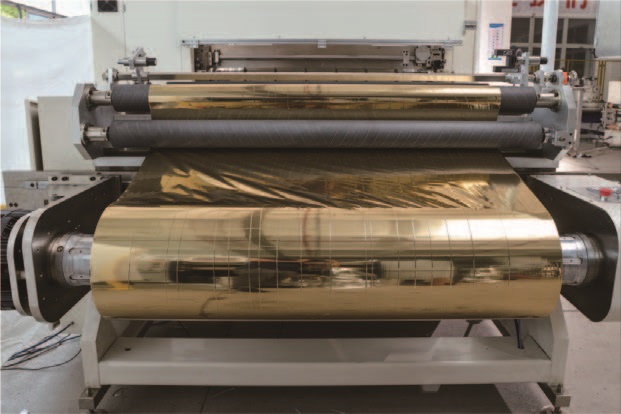
3. What Type of Edge Guiding System is Installed?
The edge guiding (web guiding) system ensures that the foil maintains correct lateral alignment throughout the slitting process. Misalignment results in uneven end faces, "telescoping," and downstream feeding problems.
What to ask: "Does the machine use ultrasonic or photoelectric sensors for edge detection?" For hot stamping foil, especially holographic and metallized varieties, ultrasonic sensors are strongly preferred. Photoelectric sensors can be unreliable with reflective or metallic materials, whereas ultrasonic detection is unaffected by color, transparency, or surface reflectivity. Also inquire about the response speed of the correction actuator—it must be capable of millisecond-level adjustments during high-speed operation.
4. What Blade System is Provided, and What is the Expected Blade Life?
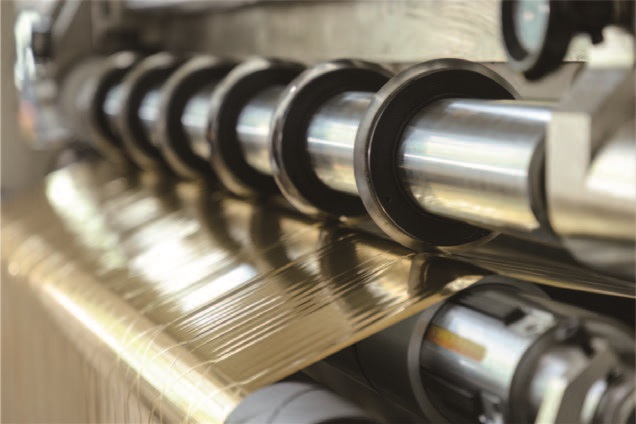
The blade system is the heart of the slitting process, and dull blades are the primary cause of burrs, dust generation, and foil breakage. Hot stamping foil often has an adhesive layer that can cause ordinary blades to gum up and lose sharpness quickly.
What to ask: "What blade material and coating are used—carbide, diamond-coated, or standard steel?" Diamond-coated or carbide blades offer significantly longer service life and more consistent cuts. Also ask about the blade engagement (overlap) range; for hot stamping foil, this is typically 0.02–0.05mm, and the machine should offer precise adjustment capability. Finally, request information on blade replacement frequency and the time required for a complete blade change, as this directly affects your operational costs and uptime.
5. What is the Maximum Rewinding Diameter, and How is Winding Neatness Ensured?
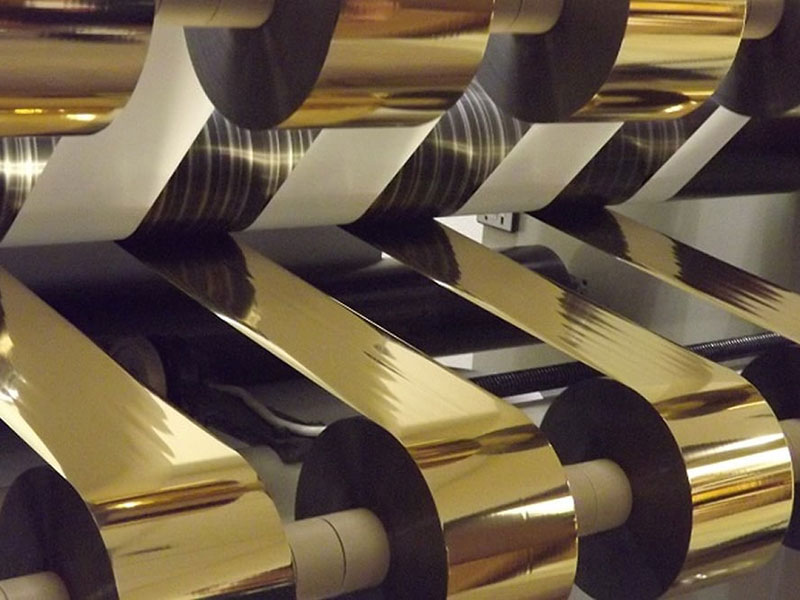
Winding neatness is a critical quality indicator that affects not only the appearance of finished rolls but also their performance in downstream stamping equipment. Poorly wound rolls with uneven end faces can cause "telescoping," deviation, or breakage during unwinding at the stamping press.
What to ask: "What is the maximum rewinding diameter, and what is the specified end face alignment tolerance?" A high-quality machine should achieve end face misalignment of 0.1mm or less. Ask about the type of rewinding shafts—air shafts, slip friction shafts, or both—and whether the machine supports independent tension control for each finished roll. For operations requiring multiple narrow rolls from a single jumbo roll, slip friction shafts allow each core to slip independently, compensating for slight thickness variations and ensuring uniform tension across all finished rolls.
6. How Does the Machine Handle Static Electricity and Dust?
Hot stamping foil slitting generates significant static electricity due to the high-speed friction between the plastic film substrate and the machine components. This static charge attracts dust and foil particles, which adhere to the foil surface and cause "foil dust" contamination, leading to defects in the final stamped product.
What to ask: "What static elimination and dust removal systems are integrated?" Look for ionizing air bars or static elimination brushes positioned before and after the cutting zone, combined with a dust extraction system to remove debris immediately. The effectiveness of these systems directly impacts the surface quality of your finished rolls, especially for high-end applications like cosmetic packaging and premium labels.
7. What is the Machine's Core Drive and Control Architecture?
The control system determines the machine's precision, responsiveness, and long-term reliability. Traditional variable-frequency drives cannot match the precision and dynamic response of servo-based systems.
What to ask: "Which components are servo-driven, and what brands are used for PLC, servo motors, and sensors?" Servo-driven slitting machines offer faster response times, higher precision, and better tension stability during acceleration and deceleration. Ask specifically about the brand and origin of critical electrical components—while this information should not be the sole basis for your decision, it provides insight into the overall quality positioning of the machine.
8. What is the Material Compatibility Range?
While most hot stamping foil slitting machines are designed to handle similar materials, there are significant variations in foil types: standard pigment foil, metallized foil, holographic/laser foil, cold foil, and specialty coatings each have different physical properties.
What to ask: "Can you demonstrate successful slitting of our specific foil types at production speed?" Be wary of suppliers who claim their machine handles "all materials perfectly"—this is rarely true in practice. Different foil types may require different blade angles, tension settings, and edge guiding configurations. The best approach is to bring samples of your most challenging materials to the supplier's facility for a comprehensive test.
9. What is the Total Cost of Ownership, Including Maintenance and Downtime?
The purchase price is only the beginning of your investment. Downtime, maintenance, blade replacement, and material waste all contribute to the total cost of ownership (TCO) over the machine's lifetime.
What to ask: "What is the recommended maintenance schedule, and what are the typical costs for consumable parts?" A machine that is inexpensive upfront but requires frequent blade changes, suffers from excessive downtime, or generates high material waste can quickly eclipse the savings from a lower purchase price. Ask for references from existing customers and inquire about their actual experience with reliability, service response time, and parts availability.
10. What Support and Training Does the Supplier Provide?
Slitting machine performance depends heavily on proper setup, tension tuning, and ongoing maintenance. Even the best machine will underperform if it is not correctly configured for your specific materials and operating conditions.
What to ask: "What commissioning support, operator training, and after-sales service are included?" Ideally, the supplier should provide on-site installation and commissioning, comprehensive operator training, and responsive technical support. Ask about the availability of spare parts, the typical response time for service calls, and whether remote diagnostics are available. A supplier who understands the nuances of hot stamping foil slitting can be an invaluable partner in optimizing your production processes over time.
Conclusion
Selecting the right hot stamping foil slitting machine requires looking beyond the specification sheet and purchase price. The most reliable approach is to test the machine with your own materials under realistic production conditions, ask detailed questions about the systems that matter most—tension control, edge guiding, blade quality, and winding precision—and carefully evaluate the supplier's technical expertise and support capabilities. A machine that delivers consistent precision, minimizes waste, and operates reliably will repay its cost many times over through higher yield and reduced downtime.
For a personalized assessment of your slitting requirements, contact our technical team to schedule a material trial and discuss your specific production needs.
0 Comments