



Why the Right Eye Protection Can Save More Than Just Your Sight

Posted by sharmaakaran78
from the Safety/Security category at
08 Jul 2026 11:07:46 am.
Share this page: 


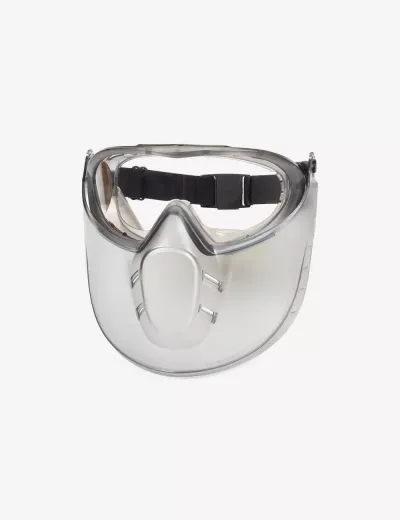
Why Eye Protection Demands More Attention
The eyes are among the most exposed and least protected organs during industrial work. Unlike hands or feet, they cannot be armoured by instinct – a worker cannot simply pull back when a spark travels at 200 metres per second. Hazards can originate from almost any direction: flying debris from grinding or drilling, dust and fine particulate matter from cement or mining operations, chemical splashes in lab or manufacturing environments, infrared and ultraviolet radiation from welding arcs, and impact from tools or falling objects.
The consequences of inadequate protection range from temporary irritation and corneal abrasion to partial or permanent vision loss. In an industrial context where a worker's livelihood depends on their physical capability, eye injuries carry long-term professional and personal consequences that no post-incident compensation can fully address. Prevention through the correct choice and consistent use of protective eyewear is always the better outcome.
Types of Eye Protection and When Each Applies
Not all safety eyewear is equivalent. The right product depends entirely on the specific hazards present in a given work environment.
Safety Spectacles are the most commonly used form of eye protection across general industrial and construction settings. They protect against impact, flying particles, and dust. Modern safety spectacles feature polycarbonate lenses that are significantly more impact-resistant than standard optical lenses, and are available with anti-scratch and anti-fog coatings that maintain clarity over extended wear. They are designed to be lightweight and comfortable enough for full-shift use without causing fatigue or pressure points. For workers who already wear prescription glasses, over-the-glasses (OTG) safety spectacles are available, providing certified protection without requiring a custom solution.
Chemical Splash Safety Goggles provide a sealed enclosure around the eye, making them the correct choice wherever there is a risk of liquid hazard exposure. Unlike safety spectacles, which leave small gaps at the sides and top, chemical splash goggles conform closely to the face and incorporate indirect ventilation to allow airflow while preventing liquid ingress. They are standard PPE in pharmaceutical manufacturing, laboratory settings, chemical and fertiliser plants, and any environment where hazardous liquids are handled, mixed, or transferred.
Welding Eyewear addresses a distinctly different hazard i.e., harmful radiation. Gas welding spectacles and electric arc welding eyewear protect against the intense visible light, infrared radiation, and ultraviolet radiation produced during welding processes. They use shaded lenses of specific grades that filter radiation at the wavelengths most damaging to the eye while preserving adequate visibility for the task at hand.
Key Features to Evaluate
When selecting any form of safety eyewear, several technical features determine whether the product will provide genuine protection or simply the appearance of it.
- Lens material is foundational. Polycarbonate lenses offer high impact resistance, while trivex lenses provide better optical clarity for precision work.
- Anti-fog coatings are critical in high-humidity environments, physically demanding tasks, or anywhere where the temperature differential between the wearer's body heat and the environment causes condensation.
- Anti-scratch coatings extend lens life in dusty or particle-heavy settings.
- UV-protective coatings are essential for outdoor work environments including construction, solar installations, and agriculture, where prolonged UV exposure causes cumulative damage.
- Fit and adjustability matter for compliance. Eyewear that is uncomfortable or poorly fitted will be removed, defeating its purpose entirely. Ergonomic temples, adjustable nose bridges, and lightweight frames all contribute to consistent wear.
- Compliance with certified standards – EN 166 (Europe), ANSI Z87.1 (USA), and IS 5983 (India) is non-negotiable for genuine industrial-grade protection.
Conclusion
Selecting the right eye protection goggles or spectacles for a specific industrial environment is not a secondary consideration; it is one of the most direct investments a safety manager or worker can make in long-term wellbeing. Whether the risk is flying debris on a construction site, chemical splashes in a laboratory, or arc radiation during fabrication work, the correct certified eyewear, worn consistently and correctly, is the difference between a near-miss and a life-altering injury.
0 Comments