



GPO-3 vs FR4: Differences and Applications
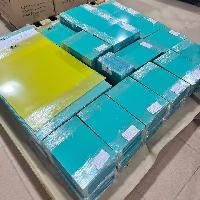
Posted by hitemprocom
from the Technology category at
30 Dec 2025 02:42:23 pm.
Share this page: 


What Is GPO-3?
GPO-3 is a polyester glass mat laminate produced by impregnating glass fiber mats with unsaturated polyester resin. It is known for its excellent arc resistance, flame retardancy, and mechanical strength, especially in applications requiring thick insulation components. GPO-3 is commonly used in low- to medium-voltage electrical systems.
What Is FR4?
FR4 is an epoxy glass cloth laminate made by impregnating woven fiberglass fabric with epoxy resin. It offers high dielectric strength, good mechanical stability, and excellent dimensional accuracy, making it widely used in electrical, electronic, and structural insulation components.
Key Differences Between GPO-3 and FR41. Mechanical Strength and Structure
GPO-3 has a glass mat structure, providing good impact resistance and strength in thicker sections. It is less brittle and well suited for molded or machined thick parts.
FR4 uses woven glass cloth, resulting in higher overall mechanical strength and stiffness, especially in thinner sections and precision components.
GPO-3 typically operates at a continuous temperature rating of around 130°C.
FR4 offers higher thermal performance, with continuous operating temperatures around 155°C, making it more suitable for higher-temperature environments.
GPO-3 excels in arc and tracking resistance, making it ideal for electrical panels, switchgear, and bus bar supports.
FR4 provides higher dielectric strength and stable insulation performance, particularly in high-frequency or precision electrical applications.
GPO-3 is easier to machine in thick formats and produces smoother edges with less fiber exposure.
FR4 requires more controlled CNC machining due to its woven glass structure but allows tighter tolerances and more precise part designs.
GPO-3 is generally more cost-effective for thick insulation parts and large electrical components.
FR4 tends to be slightly more expensive but offers better performance in applications demanding higher precision and thermal resistance.
GPO-3 Applications:
Switchgear and electrical panels
Bus bar supports and phase separators
Electrical insulation plates and spacers
Arc-resistant components
FR4 Applications:
Electrical and electronic insulation parts
Transformer and motor components
CNC-machined fixtures and structural supports
Precision insulation components
Both GPO-3 and FR4 are reliable insulation materials, but they serve different purposes. GPO-3 is preferred for applications requiring excellent arc resistance, thick-section strength, and cost efficiency, while FR4 is ideal for higher-temperature, precision, and mechanically demanding applications.
By understanding the differences in material structure, performance, and processing, manufacturers can select the most appropriate laminate to ensure safety, reliability, and long-term performance in their electrical and industrial systems.
0 Comments